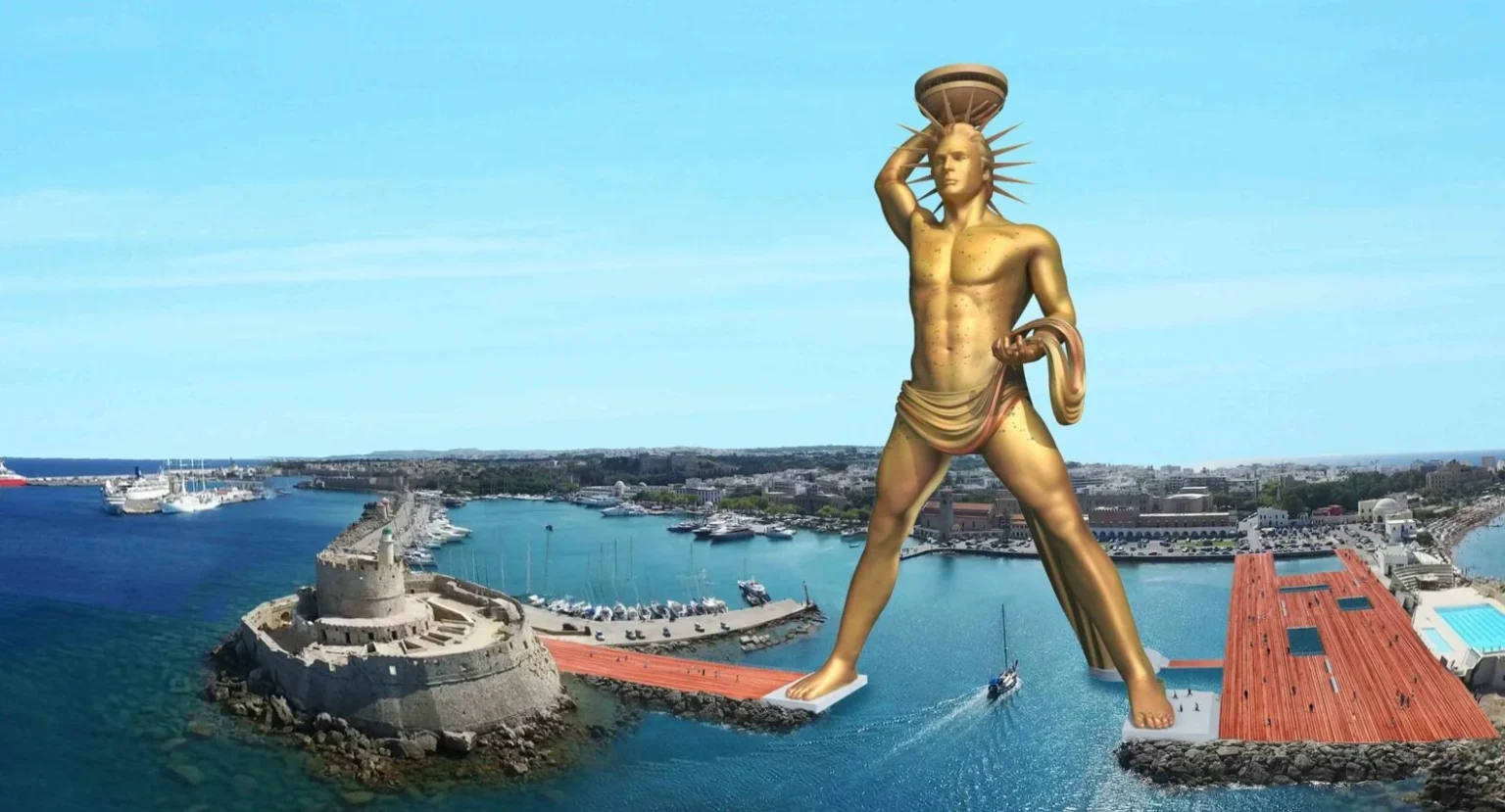
The Colossus of Rhodes
🗿 The Colossus of Rhodes – Wonder of the Ancient World
The Colossus of Rhodes was a towering statue that once stood at the entrance of the harbor of Rhodes. It is remembered as one of the Seven Wonders of the Ancient World, a symbol of victory, freedom, and the artistic genius of the ancient Greeks.
📜 Historical Background
- Built around 292–280 BC by the sculptor Chares of Lindos, the Colossus was constructed to celebrate Rhodes’ successful defense against a siege by Demetrius I of Macedon.
- It was a tribute to the sun god Helios, the island’s patron deity.
🗽 What Did It Look Like?
- According to ancient accounts, the Colossus stood over 30 meters (98 feet) tall, making it one of the tallest statues of the ancient world.
- It was made of bronze plates over an iron and stone framework.
- Contrary to popular myths, it did not straddle the harbor entrance. Most historians agree it likely stood beside the Mandraki harbor, possibly on a pedestal.
⚡ Its Fall and Disappearance
- In 226 BC, just 54 years after its completion, the statue was destroyed by a massive earthquake.
- The Rhodians chose not to rebuild it, following an oracle’s advice.
- The broken pieces lay for over 800 years, until Arab invaders sold the remains as scrap metal in the 7th century AD.
🧭 Legacy and Mystery
- Although it no longer exists, the Colossus remains a powerful symbol of ancient resilience and engineering.
- Modern proposals to rebuild the Colossus have been suggested as cultural and tourism projects, but none have been realized.
📍 Where to Find Its Legacy Today
- Mandraki Harbor: Where the Colossus likely once stood. Two columns with statues of a deer and a doe now mark the harbor entrance.
- Archaeological Museum of Rhodes: Features artifacts and history from the Hellenistic period.
- Statues and models in local museums and exhibitions around the island commemorate the Colossus.


 Login with Google
Add Comment